OpenAI Sponsored Agents Explained: How ChatGPT Ads Could Change AI Search and Commerce
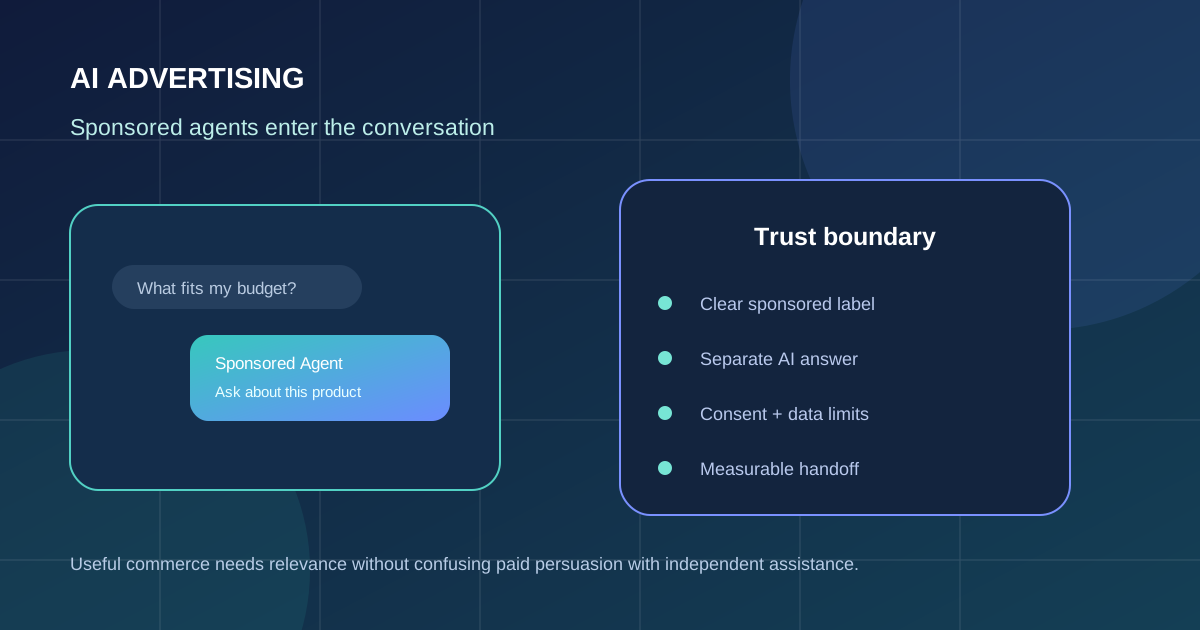
OpenAI is testing Sponsored Agents in ChatGPT, connecting advertising with conversational product discovery. This analysis explains the trust boundary, data flow, merchant integrations and risks for users and businesses.
Advertising is moving from a link beside an answer toward a conversation that can explain, compare and hand a user to a business. OpenAI says it is testing Sponsored Agents in ChatGPT: after seeing a relevant ad, a user can choose a clearly labeled conversation with a business-sponsored agent, ask follow-up questions and follow a link to the business website. That sounds like a new ad format, but the deeper change is architectural. A conversational system must distinguish independent assistance from paid persuasion, limit what data a sponsor receives, and make the handoff to a business visible and voluntary.
What Sponsored Agents are
A paid conversation that begins from an ad, not an invisible replacement for ChatGPT’s answer.
OpenAI’s September 16 announcement describes Sponsored Agents as an experience being tested with selected advertisers in the United States. After a user sees a relevant ad, the user can choose to start a clearly labeled conversation with the sponsored business agent. The agent can answer product or service questions, continue the discussion, and link the user to the business website when the user is ready.
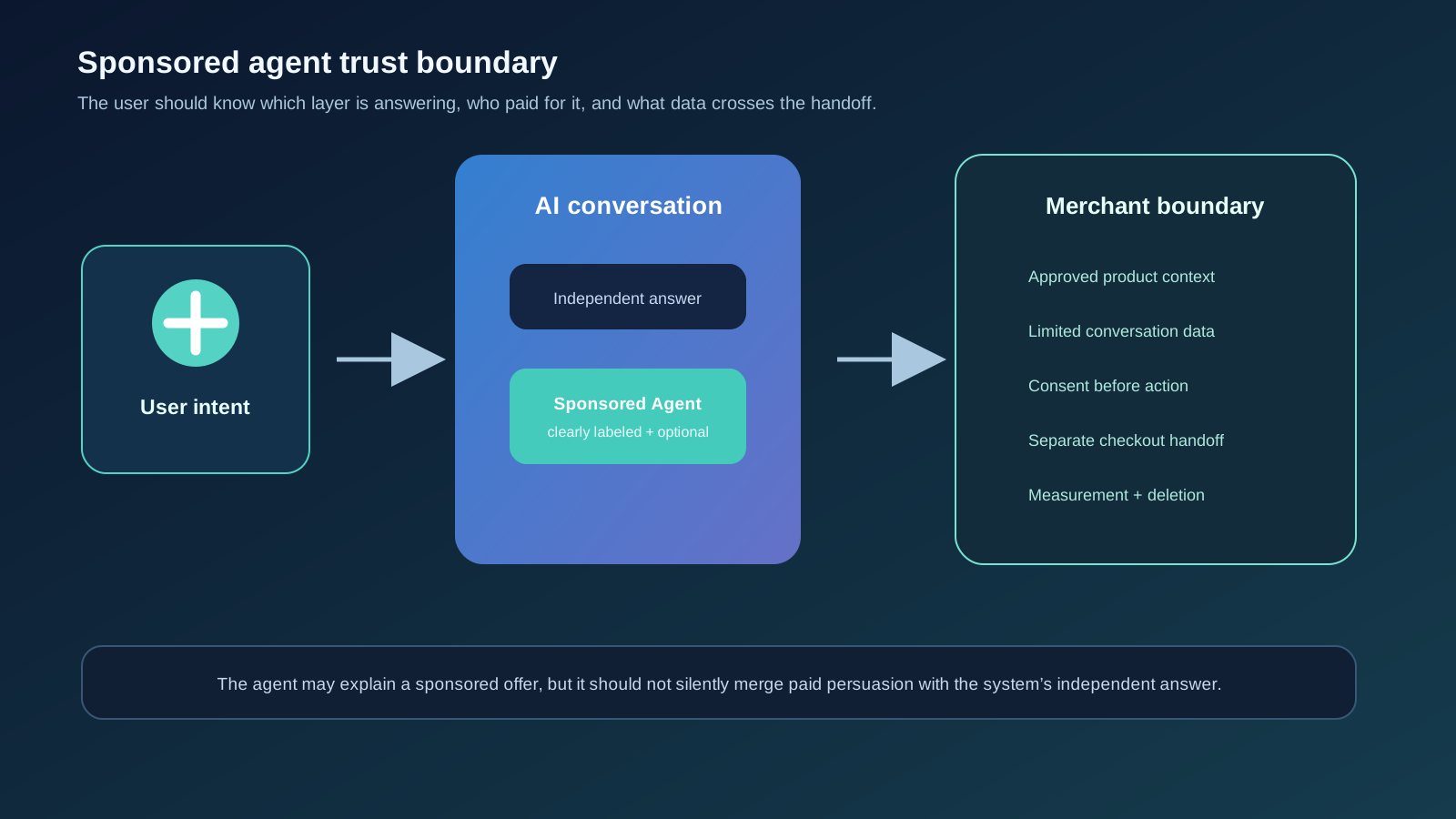
OpenAI says the sponsored conversation is distinct from ChatGPT’s independent answers and separate from the original conversation the user started. That separation is the most important product promise. If a paid agent appears to be the same thing as an independent assistant, users may not understand whether a recommendation came from relevance, evidence, an advertiser’s instructions or a commercial ranking rule.
The format also differs from a static display ad. A banner offers limited context; a sponsored agent can interpret intent, answer objections, compare features and guide a decision. That creates more utility for a genuinely interested user, but it also gives the sponsor a much larger influence surface. Disclosure and user choice therefore need to remain visible throughout the conversation, not only at the first click.
This follows the broader shift from chat answers to delegated actions discussed in our persistent enterprise agents analysis: as agents become more proactive, the system must show who is acting, for what purpose and under whose authority.
| Layer | Role | User question |
|---|---|---|
| Independent answer | General ChatGPT assistance and information | Is this answer independent of an advertiser? |
| Sponsored Agent | A business-funded conversation after an ad interaction | Who sponsors this agent and what can it recommend? |
| Merchant context | Approved product, service and business information | Which claims are sourced from the business? |
| Handoff | A link or action that moves the user to the business | What happens to my data and who completes the transaction? |
Why the trust boundary matters more than the ad label
A label is necessary, but it is not enough if the conversation still feels like neutral advice.
A sponsored label should be clear, persistent and understandable in the user’s language. It should not disappear after the first exchange, become visually weaker than the assistant’s normal identity, or be hidden behind a settings screen. The user should be able to tell when the agent is speaking for a business and when ChatGPT is providing independent assistance.
The agent should also avoid implying neutrality. Phrases such as “the best option for you” carry a different meaning when the speaker is paid by the brand. Sponsored agents can still be useful, but they should describe their role accurately: product information, availability, policies, fit and next steps from the merchant’s perspective.
A second boundary concerns data. A business may need product preferences or questions to answer the user, but that does not automatically justify receiving the user’s entire ChatGPT history, unrelated personal context, contacts, location, spending profile or private documents. Data minimization should be designed into the handoff rather than promised in a long policy page after the conversation ends.
The same principle applies to tool access in our MCP gateway analysis: discovery, identity, authorization and effect are separate boundaries. A sponsor’s conversational access should not silently become broad access to a user’s data.
- Show the sponsored identity before and during the conversation.
- Keep paid recommendations distinct from independent answers.
- Send only the context needed for the user’s chosen task.
- Give users an obvious exit without penalty or repeated prompts.
- Record consent and the exact data shared with the merchant.
- Make deletion, retention and support responsibility clear.
The merchant opportunity is conversational product discovery
The best early use case is helping a user understand a product, not pressuring them to buy.
OpenAI’s announcement positions Sponsored Agents around questions users already ask before a purchase: whether a product fits a need, how it compares, how to care for it, or which option fits a constraint. This can reduce the distance between an ad impression and useful product education. A merchant can explain specifications, availability, compatibility, financing terms or support policies in a dialogue rather than forcing a user through a generic landing page.
The quality of that experience depends on the merchant’s underlying data. Product feeds, prices, inventory, policies, images, return terms and regional availability need clear ownership and update timestamps. A fluent answer based on stale inventory or an outdated policy is worse than a static page because the conversation creates more confidence.
A sponsored agent should therefore cite or expose the relevant product facts, state uncertainty, and defer to the merchant’s current checkout or support system for final availability and terms. The agent’s goal is not to win every objection; it is to help the user make an informed next decision.
OpenAI’s earlier Agents API architecture offers a useful systems comparison: tools and environments need explicit ownership, and a successful agent run does not replace the application’s business ledger or authorization.
| Data | Failure if stale | Control |
|---|---|---|
| Price and promotion | User sees an offer that no longer exists | Timestamped feed and checkout revalidation |
| Inventory and delivery | Agent promises unavailable or late delivery | Live availability check before handoff |
| Specifications | Comparison or compatibility advice is wrong | Structured catalog and source provenance |
| Returns and support | User receives a misleading post-purchase expectation | Versioned policy content and escalation path |
Sponsored Agents are not the same as agentic commerce
A conversation and a transaction have different risk levels.
The current announcement describes a sponsored conversation and a link to the business website. That is different from allowing an agent to place an order, use a stored payment method, change a delivery address or negotiate a return. Those actions require a separate transaction boundary with identity, confirmation, fraud controls, payment authorization and a reliable receipt.
A user may be comfortable asking a sponsored agent about a product but not with giving it permission to purchase. The interface should not make those permissions feel like one continuous step. Explain when the user is leaving the conversational surface, which business receives the request, what account is used, and what final confirmation is required.
This distinction matters for businesses too. A sponsored agent can qualify interest and answer questions without becoming a replacement for the merchant’s commerce system. Keep pricing, inventory, order state, payment and fulfillment authoritative in the merchant’s systems; let the conversation help the user reach the right next action.
Our human-in-the-loop automation guide explains the same approval principle: informational assistance can stay fast, while consequential effects require an explicit decision boundary.
Common Mistakes
- Treating a sponsored conversation as independent product advice.
- Passing a full user profile to a merchant when a small preference set would work.
- Letting the agent invent prices, delivery promises or policy exceptions.
- Combining ad engagement, checkout authorization and post-purchase support without separate consent.
- Measuring success only by clicks instead of informed outcomes, complaints and opt-outs.
What this changes for AI search and SEO
Brands will need structured, trustworthy information—not only pages optimized for blue-link rankings.
Conversational product discovery changes how a business may be found. A user can describe a need rather than search a brand name, and an AI system can compare catalog data, constraints and follow-up questions before sending the user to a merchant. That makes structured product information, accurate policies, clear differentiation and reliable availability more important than repeating keywords on a landing page.
It also introduces a new form of discoverability risk. If a merchant’s feed is incomplete, stale or ambiguous, the agent may omit the product or describe it incorrectly. If a business writes marketing copy that makes unsupported claims, a conversational system may repeat those claims with a tone of confidence. Search visibility should therefore be paired with evidence, freshness and human review.
For publishers and site owners, the lesson is not to create thin AI-generated shopping pages. Helpful content still needs first-hand analysis, transparent sources, clear authorship and a reason to exist beyond rephrasing a product feed. Conversational systems may change discovery, but they do not remove the need for trustworthy information.
That is consistent with the evidence standards in our PageBreak security analysis: broad discovery is useful, but high-confidence claims need validation before they are escalated or published.
- Maintain structured, current product and policy data.
- Make claims traceable to a source or merchant-owned fact.
- Review how the brand appears in conversational comparisons.
- Do not rely on generated pages that add no original value.
- Measure qualified assistance, satisfaction and trust alongside conversions.
A practical trust checklist for sponsored agents
The format can be useful if the commercial boundary stays visible and revocable.
Before launching a sponsored agent, define the agent’s role in one sentence that a user can understand. List the data it may receive, the claims it may make, the systems it can call, and the actions it can trigger. Then test adversarial conversations: users asking for competitor comparisons, sensitive advice, unsupported discounts, private-data access, risky purchases, or a way to hide the sponsorship label.
Keep a durable record of the user’s consent, the sponsored identity shown, the merchant content version, the data sent, the links presented and any action taken. When a complaint arrives, the business and platform should be able to reconstruct what the agent knew and why it responded that way.
Finally, give users control. They should be able to leave the sponsored conversation, ask for independent information, delete or review shared context, and reach a human or ordinary merchant support channel. A useful ad experience should earn the next step rather than trap the user inside a persuasive loop.
sponsored_agent_handoff.json{
"sponsored_agent": "brand-support-v1",
"label_shown": true,
"user_consent": "product_questions_only",
"shared_context": ["budget", "size_preference"],
"merchant_data_version": "catalog-2026-09-27",
"transaction_authorized": false,
"handoff": "merchant_site"
}Tips
- Use a separate identity and audit trail for every sponsored agent.
- Version merchant context and revalidate volatile facts before handoff.
- Keep transaction authority separate from conversational assistance.
- Provide an independent-answer path and an immediate exit.
- Review negative feedback and opt-outs as product-quality signals, not only marketing metrics.
What Sponsored Agents do not prove
A sponsored conversation does not prove that an AI recommendation is independent, that a merchant’s claims are correct, or that a user’s data is safe simply because the experience appears inside a trusted assistant. Those properties depend on disclosure, data minimization, content governance, access controls, logging and enforcement.
It also does not mean every business needs an agent. A clear product page, responsive support team and accurate catalog may serve a user better than a fluent but limited bot. The right question is whether the conversation improves understanding and access without creating new confusion or pressure.
The durable takeaway is that AI advertising is becoming an interface problem as much as a marketing problem. The companies that earn trust will separate paid persuasion from independent help, treat user context as sensitive, and make every handoff visible, optional and accountable.
FAQ
What are OpenAI Sponsored Agents?
OpenAI describes them as clearly labeled business-sponsored conversations that users can choose to start after seeing a relevant ad in ChatGPT. They can answer questions and link users to the business website.
Are Sponsored Agents the same as normal ChatGPT answers?
No. OpenAI says the sponsored conversation is distinct from ChatGPT’s independent answers and separate from the original conversation the user started.
Will a Sponsored Agent complete purchases?
The announcement describes product or service conversations and a link to the business website. It should not be assumed that the agent has authority to complete a transaction, use payment details or change an order.
What data should a sponsored agent receive?
Only the minimum context needed for the user’s chosen task, such as a product preference or question. Unrelated conversation history, private documents and broad personal profiles should not be shared by default.
What should advertisers measure?
Measure helpfulness, qualified handoffs, user satisfaction, complaints, opt-outs, factual accuracy and data-handling outcomes alongside clicks and conversions.
Sources
Primary and authoritative sources reviewed for this article.
- OpenAI: Reimagining advertising with AI
Official announcement describing Sponsored Agents, their separation from independent ChatGPT conversations, testing with selected US advertisers, and HubSpot and Shopify integrations.
- OpenAI: Powering Product Discovery in ChatGPT
Official context on product discovery, the Agentic Commerce Protocol, merchant feeds and conversational shopping experiences.
Conclusion
Sponsored Agents could make advertising more useful by letting people ask real questions before visiting a business. But the format also brings paid persuasion into the assistant interface, where users expect clarity and trustworthy help. The safe design keeps the sponsored identity visible, separates it from independent answers, minimizes shared context, validates merchant facts and treats every transaction handoff as a separate permission boundary. AI advertising will succeed long term only if it earns attention without disguising influence as neutral assistance.