How NASA Is Moving More AI Computing Into Deep Space
NASA is testing a radiation-hardened processor designed to give spacecraft more onboard computing power. Here is what the project teaches engineers about edge AI, fault tolerance, and real-time decisions.
NASA’s High Performance Spaceflight Computing project is testing a small, radiation-hardened system-on-chip for future spacecraft. The important story is not simply that a space processor is faster. It is that more computation can happen near the sensors, where a spacecraft must respond despite long communication delays, limited bandwidth, and a hostile physical environment.
What NASA is testing
A processor built for the edge case that is literally at the edge of space.
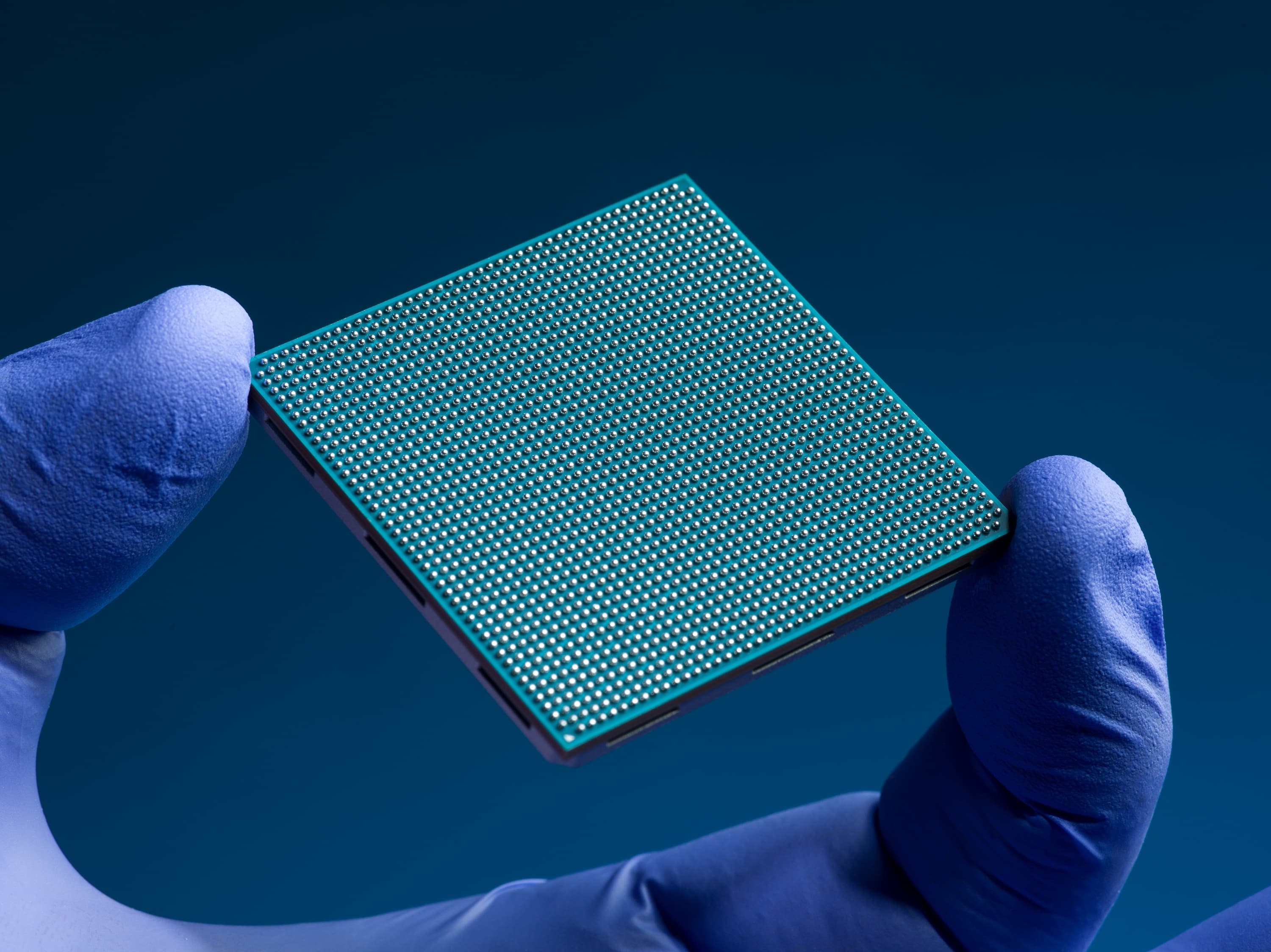
NASA’s Jet Propulsion Laboratory reported in May 2026 that it was testing a next-generation radiation-hardened processor developed with Microchip Technology. The chip is designed as a system-on-chip, combining processing, memory, networking, and input/output capabilities in a compact package.
NASA says the project targets up to 100 times the computational capacity of current spaceflight computers, while early test indications showed performance up to 500 times that of the radiation-hardened chips currently in use. Those are test-stage results, not a guarantee that every future mission will achieve the same application-level improvement.
The tests include radiation, thermal, shock, and functional campaigns, along with landing scenarios that process large volumes of sensor data. Testing began in February 2026 and was expected to continue for several months.
| Confirmed by NASA/JPL | Why engineers should care |
|---|---|
| Radiation-hardened, high-performance processor | Compute must remain dependable when repair and replacement are impossible. |
| Testing includes radiation, thermal, shock, and functional conditions | Hardware performance is only useful if the system remains available under mission conditions. |
| Landing scenarios use high-fidelity sensor data | Real-time inference depends on the full sensor-to-decision pipeline, not just model speed. |
| Early results indicate large performance gains | Benchmarks need mission workload, power, reliability, and certification context before deployment claims are made. |
Why onboard AI matters
A spacecraft cannot treat Earth as a low-latency API. Signals take time to travel, links can be unavailable, and sending every raw observation home consumes bandwidth. Local processing lets a spacecraft filter data, detect events, prioritize observations, and react to its environment before a ground operator can respond.
This is the same architectural idea behind edge computing on Earth: move selected decisions closer to the data source. The difference is that a spacecraft has a much stricter failure budget. A cloud service can be patched or restarted; a deep-space system may need to operate for years without physical access.
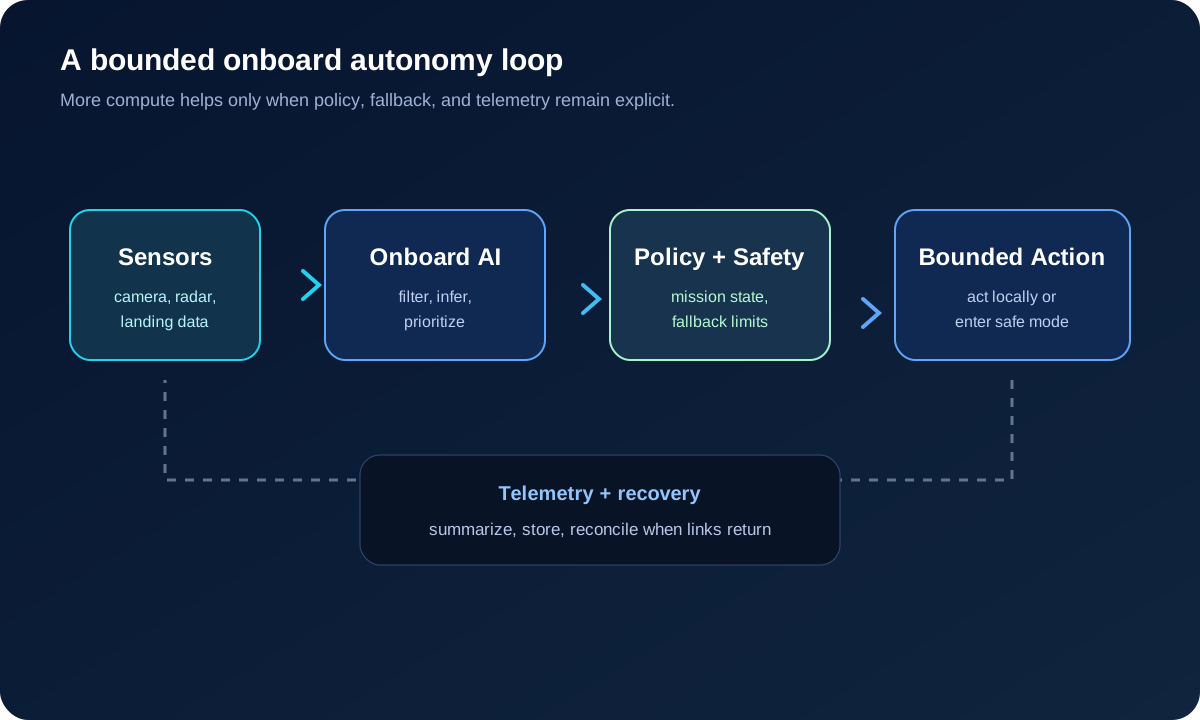
Onboard AI therefore should not mean giving a model unrestricted control. It means placing bounded inference and deterministic control logic near the sensors, with explicit fallback states and safe operating modes.
- Analyze sensor data locally before deciding what to transmit.
- Use local autonomy for time-critical events when Earth is unreachable.
- Preserve a safe mode and deterministic fallback when inference is uncertain.
- Treat compute, power, thermal limits, and radiation resilience as part of the AI system design.
The software engineering lesson: latency is only one constraint
A faster processor does not automatically create a reliable autonomous system. The application still needs bounded workloads, versioned models, validated inputs, health monitoring, resource budgets, and a recovery path when a component behaves unexpectedly.
For an autonomous agent or robotics workflow, the useful design pattern is a layered decision pipeline. A perception component proposes an interpretation, policy code checks whether the action is allowed, and a deterministic executor applies only bounded effects. The system should record why it acted and what it did, even when communication is delayed.
This approach also makes testing more meaningful. Measure end-to-end decision latency, missed detections, false positives, recovery behavior, thermal and power impact, and safe-mode transitions—not only tokens per second or raw accelerator throughput.
| Layer | Responsibility |
|---|---|
| Sensors and preprocessing | Validate inputs, detect corruption, and bound data rates. |
| Inference | Produce a constrained proposal with confidence and model version metadata. |
| Policy | Check mission state, permitted targets, safety limits, and required approvals. |
| Executor | Perform only allowlisted actions and expose an explicit failure state. |
| Recovery and telemetry | Enter safe behavior, preserve evidence, and report useful summaries when a link is available. |
What this does not prove
The JPL announcement describes a processor under test and a broader technology maturation effort. It does not mean that every spacecraft will immediately run open-ended AI, that the chip is already certified for every mission, or that benchmark performance alone establishes mission readiness.
Certification, radiation reliability, power consumption, thermal behavior, software qualification, fault handling, and mission-specific validation still matter. A promising prototype is evidence of progress, not a production deployment claim.
That distinction is useful for technology reporting in general: separate the official result, the intended use, the measured test condition, and the inference about what could happen next.
Common Mistakes
- Treating a processor benchmark as an end-to-end mission performance result.
- Assuming local AI removes the need for deterministic safety controls.
- Ignoring power, thermal, radiation, and recovery constraints because the model is accurate in a lab.
- Presenting a technology under test as already certified and deployed.
A checklist for building reliable edge AI
The NASA project is a useful reminder that reliable AI is a systems problem. For an industrial camera, robot, vehicle, or remote automation device, ask the same questions before shipping a model near a real-world actuator.
Define what the device may decide locally, what must be escalated, and what safe behavior looks like when inputs, compute, or connectivity fail. Keep the model proposal separate from the authority to execute an external effect.
Finally, test the conditions that are easy to ignore: stale inputs, corrupted data, resource exhaustion, clock drift, unavailable services, partial writes, model regressions, and recovery after restart. A resilient edge system is designed around those failures rather than surprised by them.
- Set explicit latency, power, memory, and thermal budgets.
- Version models, preprocessing, policies, and hardware assumptions together.
- Use deterministic validation and allowlists at the effect boundary.
- Provide safe fallback behavior for uncertainty and component failure.
- Log compact evidence locally and reconcile it when connectivity returns.
- Benchmark representative workloads instead of relying on a synthetic peak score.
FAQ
Is NASA’s processor already deployed on spacecraft?
The JPL announcement describes testing and technology maturation. It says the processor is intended for future spaceflight use after certification; it should not be described as broadly deployed yet.
Why process data onboard instead of sending it to Earth?
Onboard processing can reduce communication delay and bandwidth use, and it lets a spacecraft respond when communication is unavailable or too slow for the event.
Does more compute make spacecraft autonomous by itself?
No. Autonomy also requires validated software, mission policy, fault handling, safe modes, resource budgets, and testing under the conditions the system will face.
Sources
Primary and authoritative sources reviewed for this article.
- NASA/JPL: Hello Universe: NASA’s Next-Gen Space Processor Undergoes Testing
Primary source for the May 12, 2026 announcement, processor goals, testing conditions, performance indications, Microchip partnership, and intended autonomous-spacecraft applications.
Conclusion
NASA’s space processor work is a strong example of why AI capability and system reliability must be designed together. More onboard compute can enable faster local decisions, but the winning architecture still needs bounded authority, deterministic safeguards, fault tolerance, and evidence that the complete workload survives its operating environment.